Feast Day August 2nd
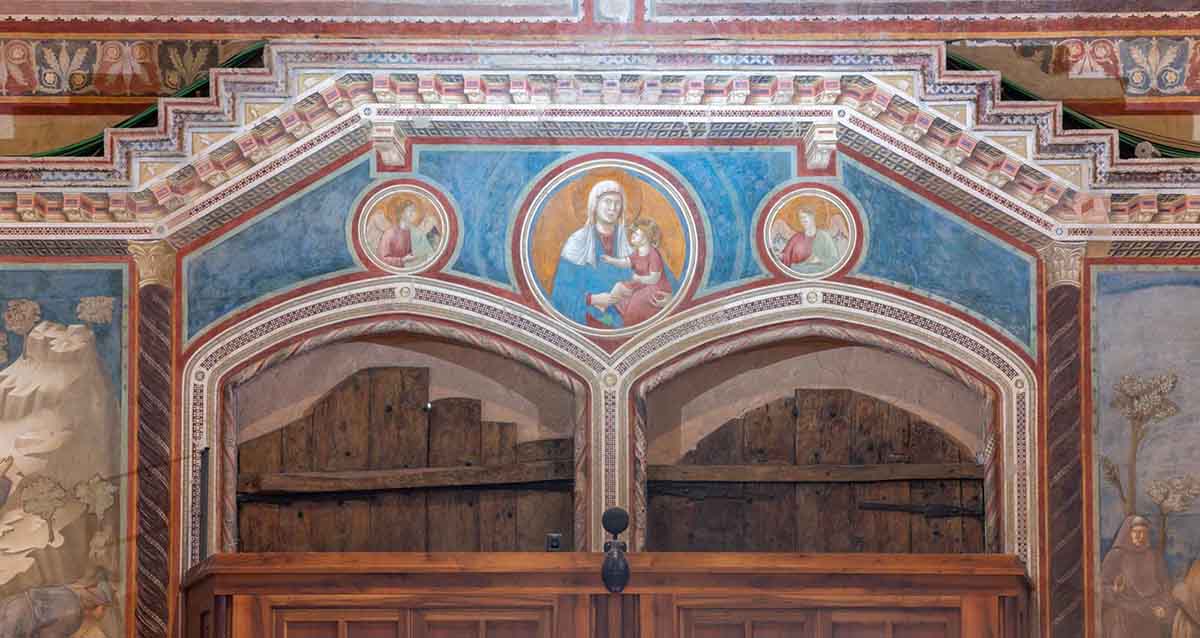
In the Basilica of St. Francis in Assisi, the frescos in the upper Basilica are meditations on the mercy of God. The frescos about St. Francis’ life speak of how God continues to be impelled by his mercy, his promise to love us all completely. As they wrap around the basilica, they are only interrupted by the back doors of the church. But a closer look reveals a keystone fresco which forms an arch above the door serving as a conduit of mercy.
… here we find a painting of the mother and child, accompanied by angels, which becomes the image of Franciscan Divine Mercy. Our Lady of the Angels, Mother of Mercy, is the last fresco seen by pilgrims departing the church, if they think to look up one last time.
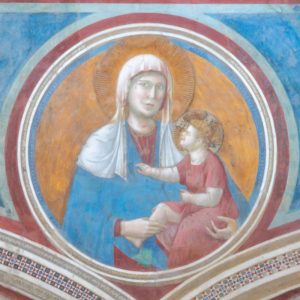
There is no coincidence that this painting is pointing pilgrims to continue their journey down in the valley at St. Mary of the Angels. …
The little chapel that Francis called home, St. Mary of the Angels, is also known as the Porziuncola. In 1216, Francis had a vision of Christ Jesus, Mary, and the angels.
Jesus asked Francis about Francis’ desires for God’s People. He replied that he wanted people to seek repentance and find forgiveness of sins. Soon after, the Pope granted the Porziuncola the honor of offering an indulgence on its feast day of August 2nd. Henceforth, St. Mary of the Angels became the chapel of pardon and mercy. …
(The above is an excerpt from a reflection by Friar Michael Lasky, General Delegate for Justice, Peace and the Integrity of Creation.)