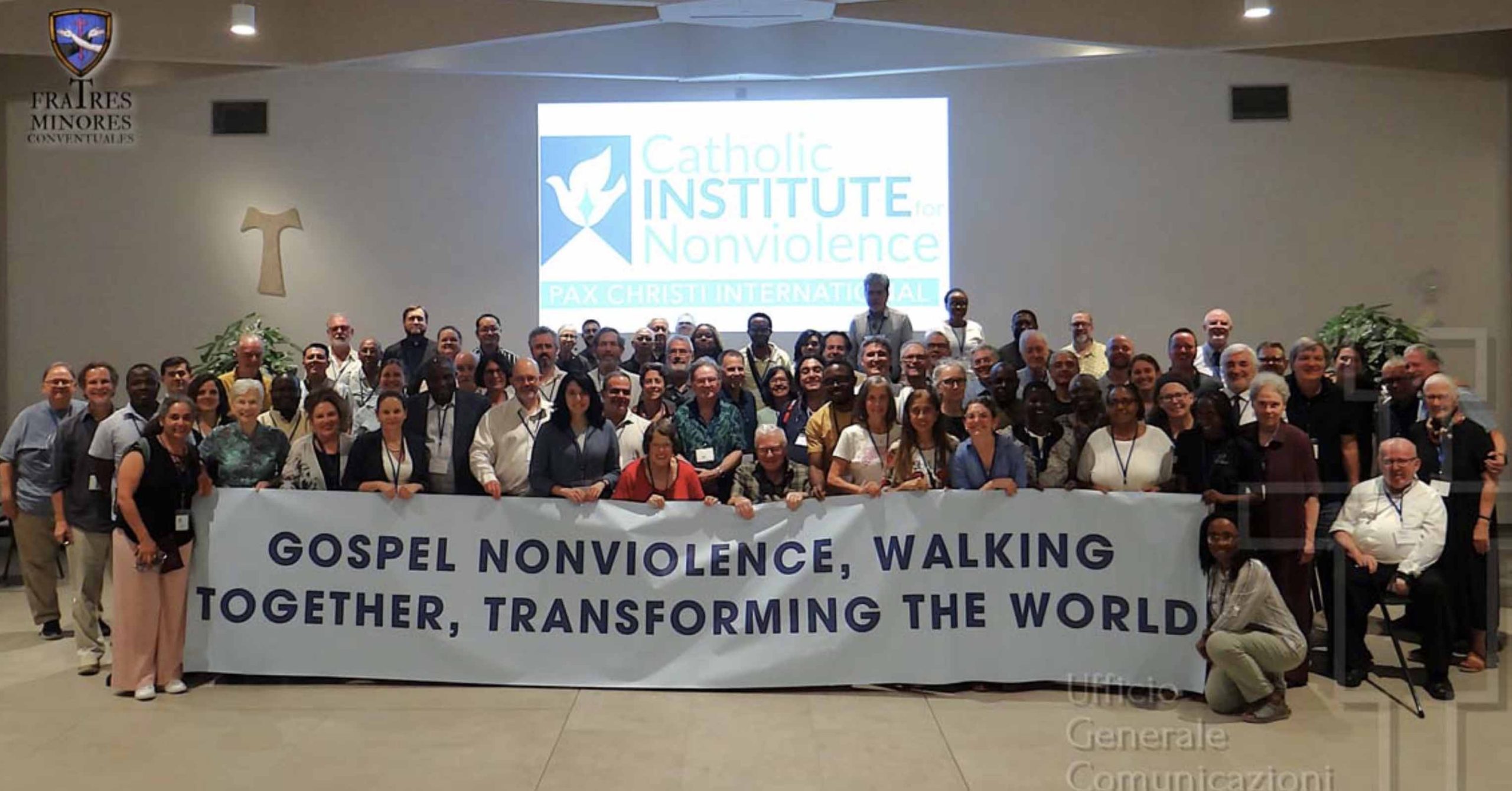

Hosting this international gathering at the Seraphicum provided an opportunity to bring the Franciscan tradition into the Church’s developing conversation on Gospel nonviolence, particularly in light of Pope Leo XIV’s call for an “unarmed and disarming peace.”
Friar Michael Lasky, OFM Conv., General Delegate for Justice, Peace and Integrity of Creation (JPIC), contributed to the training on Saturday afternoon, facilitating a session that brought together the principal themes explored during the preceding days. Rather than introduce additional material, he employed Franciscan social theatre methods, inviting participants to revisit what they had learned through dramatic expression, movement, and shared reflection.
The exercises allowed participants to explore the human relationships within conflict and consider how fear, power, and exclusion shape their responses to one another. By placing themselves within situations of tension, participants could experiment with different ways of responding, recognizing that nonviolence requires more than good intentions. It is a practice that can be learned, developed, and strengthened.
Throughout the training, participants explored nonviolent communication, mediation, restorative practices, conflict transformation, and strategies for social change. The subsequent international conference brought these skills into conversation with experiences from communities affected by armed conflict, displacement, and social injustice. Particular attention was given to unarmed civilian protection, through which trained civilians accompany vulnerable communities, help prevent violence, and strengthen local capacities for peace without carrying weapons.
These approaches find an interesting parallel in the early Franciscan tradition. Francis instructed the brothers traveling among Muslims not to engage in arguments or disputes, but to be subject to every human creature for God’s sake (Earlier Rule, 16). Written during the Crusades, his instruction proposed a different way of encountering people whom others regarded as enemies. His greeting, “May the Lord give you peace,” belonged to a way of living that took the Gospel seriously, even in circumstances of conflict.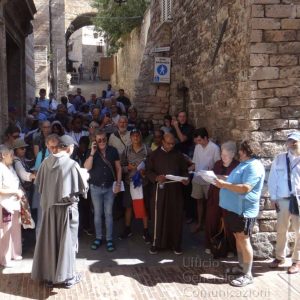 On September 11, Friar Michael led participants on a walking pilgrimage through Assisi, prepared with the Roman VI JPIC Commission of the Franciscan Family. The journey traced four moments in the lives of Francis, Bernard of Quintavalle, Lady Pica, and Clare of Assisi, each revealing something of the difficult choices involved in becoming a peacemaker.
Francis turned away from his ambitions for military glory. Bernard relinquished the security of wealth. Lady Pica freed her son from confinement, interrupting violence within her own household. Clare faced armed men at San Damiano with prayer rather than weapons.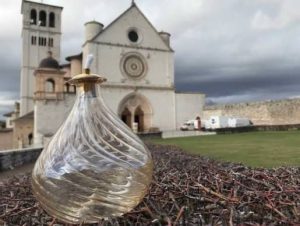 The pilgrimage invited participants to reflect upon what they themselves might need to relinquish in order to live more fully the Gospel of nonviolence. It concluded at the tomb of St. Francis, where participants gathered for a commissioning prayer. Each received a small lamp, recalling the flame that burns at the tomb and the peace they were preparing to carry into their own communities.
The gathering at the Seraphicum demonstrated the growing interest in recovering Gospel nonviolence as a serious dimension of Christian discipleship, bringing together theological reflection, practical skills, and the experience of communities working amid conflict. For Franciscans, it also offered an opportunity to rediscover something already present in their earliest sources, where the greeting of peace was accompanied by a way of life intended to make that greeting credible.
-friar Michael Lasky, OFM Conv.
General Delegate for Justice, Peace and Integrity of Creation
(See more photos at https://www.ofmconv.net/en/roma-e-assisi-incontro-internazionale-sulla-nonviolenza-evangelica/)